- YouTube For Books Course
- Posts
- 357 Prompts for Declassified Espionage Books Review - Is It Worth Buying?
357 Prompts for Declassified Espionage Books Review - Is It Worth Buying?
Create Gripping True Spy Stories from Real Intelligence Files Using AI

David Lee
March 21, 2026
What Is 357 Prompts for Declassified Espionage Books?
357 Prompts for Declassified Espionage Books is essentially a collection of highly engineered prompts designed to help users create nonfiction espionage books using AI tools. But unlike generic writing prompts, these ones are structured to generate an entire publishing package. That includes:
Book titles and subtitles
Book descriptions
SEO keywords
Cover design instructions
Chapter prompts
A narrative framework for the entire book
The goal is to produce books that read like cinematic investigative nonfiction rather than dry historical summaries. The prompts push AI to focus on real historical events using declassified files and documented records, avoiding fictional elements or invented dialogue.
What makes the system interesting is that it tries to replicate the structure of successful espionage books — particularly those that blend historical research with storytelling techniques similar to documentaries or thriller-style narratives. Instead of starting with a blank page, the prompts generate a detailed outline and guide the AI step-by-step through building the book.
In practical terms, the process looks like this:
First, you select one prompt and paste it into an AI chat tool. The system then generates a blueprint for a book, including its concept and structure.
Next, you generate the introduction and chapters using the provided prompts.
Finally, you compile the content and publish it or use it in different formats such as books, scripts, or audio content.
It’s basically a shortcut for people who want to enter the nonfiction espionage niche without needing deep historical writing experience.

357 Prompts for Declassified Espionage Books Review - Key Features
✅357 Advanced Prompt Templates Designed for Espionage Nonfiction
These prompts are very different from typical writing prompts you might find online. Instead of just giving a topic idea, each one is engineered to guide AI into producing structured, research-style content based on real historical events and declassified records.
Each prompt helps generate:
A full book concept
A narrative angle
Historical context
A writing structure that reads like investigative nonfiction
✅The “Declassified Narrative Framework” System
Another feature that really makes this product unique is what the creator calls a dynamic historical framework. Instead of producing generic chapters like most AI outputs, the prompts force the AI to build a custom framework tailored to the specific espionage topic you choose. For example, a generated framework might include phases such as:
The historical background of the operation
How the intelligence breach happened
The strategic consequences
The political fallout
Long-term intelligence impact
✅Automated Book Metadata Creation
Publishing a book involves more than just writing chapters. One of the things many new self-publishers overlook is metadata — the details that help readers find your book. This system automatically generates:
A strong book title
A subtitle that explains the angle of the story
A book description designed to attract readers
SEO keywords for publishing platforms
✅Built-In AI Cover Design Instructions
Book covers are extremely important in publishing, especially in competitive niches like history or true crime. One feature included in these prompts is a technical instruction for creating a book cover using AI image generators. The prompt acts like an art director, giving detailed design guidance such as:
Color schemes
Historical visual style
Typography suggestions
Layout direction
✅Multi-Perspective Storytelling Structure
Real espionage events rarely happen from a single point of view. They involve multiple players, including intelligence agencies, field operatives, analysts, and political leaders. One of the smartest design choices in these prompts is that they push the AI to explore events from multiple narrative perspectives.
The AI may analyze the story from angles like:
The field agent involved in the operation
Intelligence analysts reviewing the situation
Government decision-makers
The opposing intelligence agency
The long-term geopolitical consequences
✅High-Depth Chapter Generation System
Each book blueprint includes 10 detailed chapter prompts, and each one is designed to produce long-form content rather than short summaries. The prompts encourage the AI to include:
Historical reconstruction of events
Strategic intelligence analysis
The human impact of operations
Real consequences of espionage failures or successes
✅Anti-Low-Quality Writing Protocol
One interesting feature mentioned in the system is something referred to as an “anti-laziness protocol”. Basically, the prompts instruct AI to avoid common issues like:
Overusing bullet points
Producing shallow summaries
Generating generic filler content
Instead, the prompts push the AI to produce continuous narrative text with varied pacing. This is meant to create writing that feels more like a professionally written nonfiction book rather than typical AI-generated articles.
✅The Triple-Layer Content Method
The prompts also include a writing technique that combines three elements in every chapter.
These include:
Immersive storytelling of the historical event
Strategic analysis of what happened behind the scenes
The real-world consequences of the intelligence operation
This method helps create depth in the content. Many readers who enjoy espionage books want more than just storytelling — they want insight into why events mattered. The prompts are structured to encourage that type of analysis.
✅Access to 51 High-Demand Espionage Topics
Another strong feature is the wide range of espionage themes included in the system. The prompts can be used to create books around many historical intelligence events, such as:
Cold War espionage
Intelligence leaks
CIA and KGB operations
cyber warfare
surveillance programs
intelligence failures
covert missions
✅ Multi-Platform Content Creation Possibilities
The system isn’t limited to writing books. The output can also be used for:
YouTube documentary scripts
podcast episodes
newsletters
blog articles
serialized history content
audiobooks
Because the writing style is designed to be narrative-driven, it works well across different platforms. This opens up opportunities beyond just self-publishing.
How Much Does 357 Prompts for Declassified Espionage Books Cost?
❤️ 357 Prompts for Declassified Espionage Books Front End ($17)
357 Prompts for Declassified Espionage Books is currently priced at $17 as a one-time purchase, which honestly caught my attention right away. Most AI writing tools or publishing systems these days run on monthly subscriptions, so seeing something like this available for a single payment felt pretty reasonable to try.
What really pushed me to look into it was the growing interest in true espionage history. This niche is surprisingly active — some titles in the space are reportedly selling dozens of copies a day. And after spending some time browsing what readers are saying online, it’s clear that many people are tired of overly academic history books. They want stories that feel real, intense, and revealing — the kind of behind-the-scenes intelligence stories that usually stay buried in archives.
That’s where 357 Prompts for Declassified Espionage Books actually feels useful. Instead of trying to figure everything out on your own, the prompts guide AI to help you structure a book around real intelligence events and declassified operations. When I tested it, the process felt surprisingly straightforward. You don’t need a history degree, and you definitely don’t need to spend weeks digging through research just to get started.
What I like is that it lowers the barrier to entering this niche. If you’ve ever thought about publishing historical or investigative-style books but didn’t know where to begin, this gives you a starting framework. From there, you can shape the content into your own project and style.
At this price—way cheaper than courses, ghostwriters, or solo research—it's a no-brainer for anyone eyeing AI publishing profits.
If you’re curious about creating books or content in the espionage history space, this might be worth taking a look at. At the very least, it can help you test an idea or start a project without a big upfront investment.
➡️ OTO 1: 763 Prompts for Declassified Espionage Books – $27
Unlock 763 fresh super-prompts across the same 51 high-demand categories you know and love. Each one packs the advanced logic, "Zero-Fiction" rules, and cinematic flair from the core set. Drill deep into granular mysteries, infiltrations, and betrayals to own niche markets.
Every prompt delivers the full "Cinematic Publishing Factory":
Custom Declassified Frameworks: Tailored 3-6 step investigative paths for each op.
Cinematic Chapters: 10 prompts per book with tension beats, "Triple-Layer Expansion," and punchy paragraphs—no fluff.
Visual Automation: Ready-to-use 2:3 archival cover prompts for bestseller looks.
Market Metadata: Trigger-word titles, gripping blurbs, and SEO firepower.
➡️ OTO 2: 2,943 Prompts for Declassified Espionage Books – $67
Supercharge with 2,943 weaponized prompts across 134 riveting new categories. This isn't a bundle—it's an encyclopedic library of global espionage, sabotage, and shadow wars.
Same elite "Declassified Framework," cinematic immersion, and auto-generated covers. From lethal extractions to cyber chaos, satisfy readers' darkest curiosities.
Sneak peek at 134 themes:
Assassinations & Extractions: Israeli ops in Dubai; Polonium/Novichok kills; KGB SMERSH squads; embassy rescues.
Cyber Warfare: PLA Unit 61398 hacks; F-35 blueprint thefts; SWIFT sabotage; deepfakes; military worms.
Deep Cover Betrayals: KGB illegals; honey traps; MI5 moles; spies falling for the enemy.
Black Sites: CIA prisons; renditions; false flags; Operation CHAOS; guerrilla funding.
Surveillance Tech: Ivy Bells cable taps; WWII Purple Code; Crypto AG scandal; car hacks.
...plus 100+ more high-demand niches.
➡️ OTO 3: 6,891 Prompts for Declassified Espionage Books – $97
The ultimate arsenal: 6,891 prompts decoding deception, sabotage, tradecraft, and spy legends into HBO-worthy books. Tap 314 zero-competition micro-markets with fierce reader hunger. Revolutionize complex, controversial topics no one else touches.
Power up books on:
Bizarre Tradecraft: Cold War invisible ink; newspaper signals; spy animals; mail intercepts.
Covert Lethality: Hotel hits; black ops cleanups; renditions; tying loose ends.
Historical Deception: WWII Fortitude; ghost armies; forged orders.
Cyber Frontier: Car assassinations; AI cryptanalysis; election hacks; hack-backs.
Ancient Secrets: Renaissance Vatican codes; Templar networks; Ottoman court spies.
...plus 300+ hyper-specific niches.
My Personal Experience With 357 Prompts for Declassified Espionage Books:
I decided to work on a project called: “Silent Signals: Inside the Hidden World of Cold War Intelligence Failures”.
I chose that angle because I noticed readers are often fascinated by intelligence mistakes, mole hunts, and operations that almost went wrong. Using the prompts was honestly easier than I expected. I copied the main prompt into my AI tool, and within a few minutes it generated a full book framework — including a title idea, a concept, and a suggested structure for the chapters.
That alone saved me a lot of planning time. Normally when I start a nonfiction project, I spend hours trying to figure out how to organize the story so it flows well. But here, the structure was already laid out in a way that made sense: starting with the historical background, then moving into the intelligence operation itself, followed by the consequences and the long-term impact.
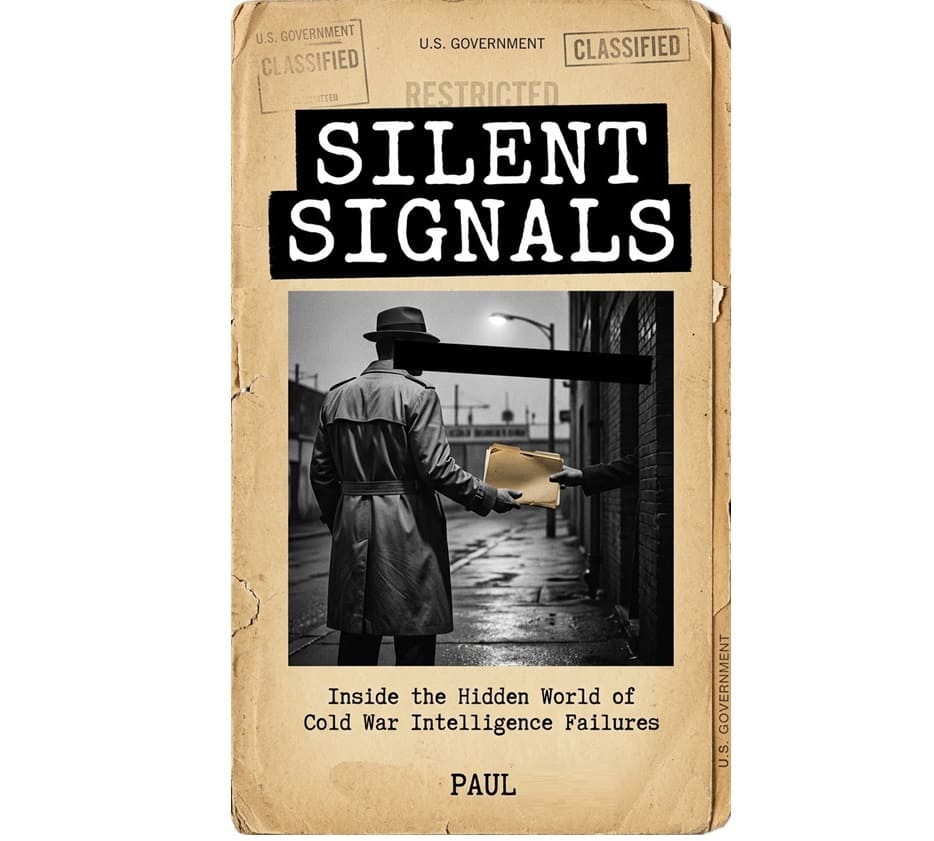
Book Identity & Branding |
Main Title: Silent Signals
Subtitle: Inside the Hidden World of Cold War Intelligence Failures
High-Impact Hook: Behind every great superpower was an even greater mistake. From compromised codes to the "moles" that stayed hidden for decades, discover the documented blunders that nearly triggered World War III.
SEO Keywords: Cold War Espionage, Intelligence Failures, CIA vs KGB, Declassified Spy Files, Military History, Signal Intelligence, Double Agents.
The "Declassified" Methodology
To give this book a premium feel, the narrative will follow a "Failure Chain" analysis. Each chapter won't just tell a story; it will dissect:
The Signal: The initial intelligence gathered.
The Static: How bureaucracy, bias, or betrayal corrupted the data.
The Fallout: The real-world consequence of the error.
Chapter Roadmap (10-Chapter Structure)
Section I: The Architecture of Error
Chapter 1: The Ghost in the Machine. An introduction to the "Golden Age" of spying and why, despite billions spent, the smartest people in the room often missed the obvious.
Chapter 2: The Cambridge Five Legacy. How social class and "old boy networks" allowed Britain’s most sensitive secrets to flow directly to Moscow for years.
Section II: Technological Blunders
Chapter 3: Broken Cyphers & Blind Spots. A deep dive into the Venona Project and the moments when technical overconfidence led to strategic disasters.
Chapter 4: The U-2 Incident. Beyond the shoot-down—how flawed intelligence regarding Soviet radar capabilities led to a global diplomatic nightmare.
Section III: The Human Variable (The Moles)
Chapter 5: Aldrich Ames & the Death of Assets. How one man’s greed dismantled the CIA’s human intelligence network in the Soviet Union.
Chapter 6: Robert Hanssen: The Digital Judas. Dissecting the FBI’s failure to catch the most damaging mole in U.S. history living right under their noses.
Section IV: Geopolitical Fault Lines
Chapter 7: The Bay of Pigs: A Masterclass in Groupthink. Analyzing how "expert" assumptions ignored ground reality, leading to one of the most public failures in CIA history.
Chapter 8: Able Archer 83: The exercise that almost ended the world because intelligence agencies misread Soviet fear as aggression.
Section V: The Aftermath
Chapter 9: The Cost of Silence. Calculating the human and financial toll of these failures and how they shifted the borders of the modern world.
Chapter 10: Echoes in the Digital Age. How the intelligence failures of the Cold War shaped today’s cyber-espionage and surveillance landscape.
The Sales Description (Back Cover Copy)
The world was saved by heroes, but it was almost lost by bureaucrats.
In the high-stakes chess match of the Cold War, information was the ultimate currency. But what happens when the information is wrong?
Silent Signals pulls back the curtain on the most significant intelligence disasters of the 20th century. Using declassified files and documented records, this investigative journey explores the missed warnings, the double agents, and the technological glitches that defined an era of paranoia. From the halls of Langley to the bunkers of the Kremlin, learn how "groupthink" and betrayal turned sure-fire victories into catastrophic defeats.
This isn't just history. It’s a forensic autopsy of the secret war.
After that, I started generating the chapters one by one using the chapter prompts included in the system.
What surprised me most was how the content felt more like a documentary-style narrative rather than just AI summarizing facts. The prompts encouraged the AI to explain the situation, the people involved, and why the operation mattered in the bigger geopolitical picture. That made the writing much easier to refine into something that actually reads like a book instead of a long article.
Of course, I still edited and polished the content — I think that’s important with any AI-assisted writing. But instead of staring at a blank page, I was working with a solid draft that already had direction.
Within a few sessions, I had a working manuscript outline and several completed chapters. That’s something that normally would have taken me much longer if I were starting from scratch.
Chapter 1: The Ghost in the Machine The Berlin Dead Drop (1961) The rain in West Berlin didn’t wash away the tension; it only made the shadows deeper. In the early hours of a November morning, a lone figure leaned against a damp brick wall near the Glienicke Bridge. In his pocket was a microfilm canister containing the deployment schedules of the U.S. 7th Army. Across the bridge, a Soviet handler waited. On paper, the West had the advantage. They had the satellites, the cryptographers, and the billions of dollars in surveillance tech. But as the canister changed hands, a "silent signal" was sent—not through a radio wire, but through a failure of human intuition. The West didn't know their codes were broken. They didn't know their "asset" was a triple agent. They were flying blind in a room full of mirrors. The Illusion of Omniscience For decades, the narrative of the Cold War was one of calculated brilliance. We were told of the "Great Game"—a high-stakes chess match where the CIA and the KGB moved pieces with surgical precision. However, declassified files from the Stasi, the Mitrokhin Archive, and the CIA’s own Internal Review Boards tell a different story. It is a story not of brilliance, but of The Ghost in the Machine: the recurring, systemic failures that turned high-tech intelligence into dangerous noise. Intelligence failure during the Cold War wasn't usually caused by a lack of data. In fact, the "Signals" were almost always there. The failure occurred in the interpretation. The Anatomy of a Blind Spot Why did the smartest people in the room consistently miss the obvious? As we peel back the layers of declassified history, three "Ghosts" emerge as the primary drivers of intelligence disasters: |
Mirror Imaging: The fatal assumption that your enemy thinks exactly like you do. If the U.S. wouldn't risk a nuclear strike over a specific territory, they assumed the Soviets wouldn't either.
The Information Silo: Bureaucratic walls that prevented the "Left Hand" (military intelligence) from seeing what the "Right Hand" (diplomatic signals) already knew.
The "Golden Calf" of Technology: An over-reliance on signals intelligence (SIGINT) at the expense of human intelligence (HUMINT). We trusted the machines, even when the machines were being fed lies.
The Stakes of Silence
When a signal goes unheard, or worse, is misunderstood, the cost is measured in lives. During the "Silent Signals" era, these failures didn't just lead to lost spies; they led to the brink of nuclear extinction.
In the chapters that follow, we will perform a forensic autopsy on these failures. We will move from the smoke-filled rooms of London to the digital intercept stations in the Turkish mountains to understand how the world’s most powerful intelligence machines frequently became their own worst enemies.
The Cold War was won by those who learned from their mistakes. But first, they had to survive them.
Another thing I liked was how the prompts helped me stay focused on one theme throughout the book. Sometimes when using AI alone, the content can drift or become inconsistent. Here, the prompts kept the narrative centered around the intelligence operation and its impact, which made the project feel more cohesive.
After finishing the draft of my project, I realized the biggest value of 357 Prompts for Declassified Espionage Books is not just the speed — it’s the clarity it gives you when starting a new book idea. Instead of guessing what to write next, you already have a roadmap.
Would I use it again? Yes, especially if I want to create more content in the espionage or historical analysis niche. There are enough prompts in the collection to explore many different angles and projects.
If you’re someone who has been thinking about publishing nonfiction books, historical content, or even documentary-style scripts but keeps putting it off because the research and structure feel overwhelming, this tool can make that first step a lot easier.
I wouldn’t say it magically writes a perfect book for you — but it definitely gives you a strong starting point. And sometimes that’s exactly what you need to finally move forward with a project.