- YouTube For Books Course
- Posts
- Fiction Goldmine Engine PLR Review + Bonus: Is It Worth a Try?
Fiction Goldmine Engine PLR Review + Bonus: Is It Worth a Try?
Turn One Idea Into a Complete Novel System?

David Lee
April 07, 2026

What Is Fiction Goldmine Engine PLR?
Fiction Goldmine Engine PLR is a structured AI-powered fiction creation system designed to turn a single idea into a fully planned, publish-ready novel framework. Instead of asking AI to “write a book” (which usually leads to messy, inconsistent results), this engine forces AI to first build the entire architecture of the story.
We’re talking about:
A market-aware title and subtitle
A compelling book blurb
A complete story bible
A structured 4-act plot
A full chapter-by-chapter roadmap (18–24 chapters)
A sequel-ready foundation
All of that is generated before you even start writing Chapter 1. So you’re following a clear, engineered path from start to finish.
Fiction Goldmine Engine PLR Review - Key Features
✅ Controlled Fiction Architecture
At the heart of the engine is its architecture-first approach. Instead of jumping straight into writing, it forces AI to build the skeleton of the novel first. This ensures:
Every chapter has a clear purpose.
Plot progression is logical and consistent.
Character arcs remain intact from beginning to end.
This eliminates the common pitfalls of fragmented AI prompts, such as plot holes, rushed pacing, or inconsistent tone.
✅ Market-Aware Titles and Subtitles
The system doesn’t just generate any title—it creates market-aware titles and subtitles designed to resonate with readers and stand out in crowded marketplaces like Amazon Kindle Direct Publishing (KDP). This feature helps authors position their books for maximum visibility and sales.
✅ High-Conversion Book Blurbs
Crafting a compelling blurb is often harder than writing the book itself. Fiction Goldmine Engine PLR generates high-conversion blurbs that highlight the stakes, intrigue, and emotional pull of the story. These blurbs are optimized to convert browsers into buyers.
✅ Complete Story Bible
Continuity is critical in fiction. The engine builds a story bible that documents:
Character profiles and motivations
World-building details
Themes and conflicts
Key plot points
This ensures consistency across chapters and provides a reference point for sequels.
✅ 4-Act Structure Breakdown
The system uses the proven 4-act structure to balance pacing and tension. Each act has a defined role:
Act 1: Setup and introduction
Act 2: Rising tension and complications
Act 3: Climax and turning points
Act 4: Resolution and sequel hook
This prevents mid-book collapse and guarantees a strong ending.
✅ 18–24 Chapter Roadmap
Instead of leaving you guessing what comes next, the engine provides a chapter roadmap. Each chapter is outlined with its purpose, ensuring smooth progression and eliminating writer’s block.
✅ Chapter 1 + Controlled Continuation
The system doesn’t stop at planning—it generates Chapter 1 and sets up controlled continuation. This means you can write chapter by chapter while maintaining tone, pacing, and consistency throughout the novel.
✅ Sequel-Ready Hooks
One of the standout features is its built-in sequel potential. The engine designs endings with natural hooks, allowing you to expand one idea into a series. This is invaluable for authors looking to build long-term publishing pipelines.
✅ PLR Rights Included
Unlike most writing tools, Fiction Goldmine Engine PLR comes with Private Label Rights (PLR). This means you can:
Rebrand and sell the system as your own.
Bundle it into other offers.
Use it as a bonus in your product stack.
Keep 100% of the profits.
This dual-purpose feature makes it both a creative tool and a business asset.
✅ Guided Inputs for Ease of Use
The system only requires five simple inputs:
Core story idea
Genre
Tone
Protagonist snapshot
Desired ending style
With these, the engine builds the entire novel framework, making it accessible even for beginners.
✅ Execution Over Theory
Unlike writing courses that focus on theory, Fiction Goldmine Engine PLR emphasizes execution. You don’t just learn about structure—you apply it immediately to create a publish-ready novel.
✅ Elimination of Common AI Fiction Problems
The engine directly addresses the issues that plague AI fiction:
No more disconnected scenes.
No more plot holes.
No more weak or rushed endings.
No more fragmented prompts.
Instead, you get a unified system that ensures your story works from start to finish.
✅ Scalability for Series and Catalogs
Because of its sequel-ready design, one idea can evolve into:
A standalone novel
A multi-book series
A full fiction catalog
This scalability makes it perfect for authors and publishers aiming to build long-term assets.
✅ Entrepreneur-Friendly Design
Beyond writing, Fiction Goldmine Engine PLR is designed for entrepreneurs. With PLR rights, it can be monetized in multiple ways, making it a versatile addition to any digital product portfolio.
How Much Does Fiction Goldmine Engine PLR Cost?
❤️ Fiction Goldmine Engine PLR Front End ($14.9)
I grabbed Fiction Goldmine Engine PLR for $14.9, and honestly, it's a game-changer for anyone dipping into fiction without wanting to write every word themselves.
Here's how it went down for me: I fed in a simple idea—like "a detective in a futuristic city chasing a rogue AI." The system instantly structured the whole story, then built it out chapter by chapter (18-24 total), keeping everything consistent, flowing naturally, and building tension just right. No blank-page staring—just a complete, polished novel framework ready to go.
What sold me? The full PLR rights:
Rebrand and call it yours
Resell as-is for quick cash
Bundle with other products
Use as a lead magnet
It hits hot markets like AI tools, self-publishing, side hustles, and content creation—perfect for building your own fiction library or flipping for profit. Way simpler (and cheaper) than ghostwriters or generic PLR packs. If you're looking for an easy way to crank out fiction content, this delivers.
➡️ OTO 1: One Prompt Fiction Factory
Personal Use: $17.18
PLR Version: $27.23
If the main engine helps you build one solid book, this upgrade takes it further by helping you expand that idea into multiple books or even full collections. Instead of stopping at a single story, you can start turning one concept into a growing catalog — which is exactly how a lot of successful fiction creators scale.
➡️ OTO 2: Genre Domination Engine
Personal Use: $17.12
PLR Version: $27.25
This one is all about flexibility. It helps you replicate the same structured system across different genres, so you’re not locked into just one niche. Whether you want to explore romance, sci-fi, thriller, or anything else, you can quickly adapt and create new assets without starting from scratch every time.
➡️ OTO 3: Instant Series Builder
Personal Use: $17.13
PLR Version: $27.44
If you’re thinking long-term, this is where things get really interesting. This upgrade focuses on helping you turn a single book into a full series, with built-in expansion and continuity. So instead of creating isolated stories, you’re building connected books that keep readers coming back.
My Personal Experience With Fiction Goldmine Engine PLR:
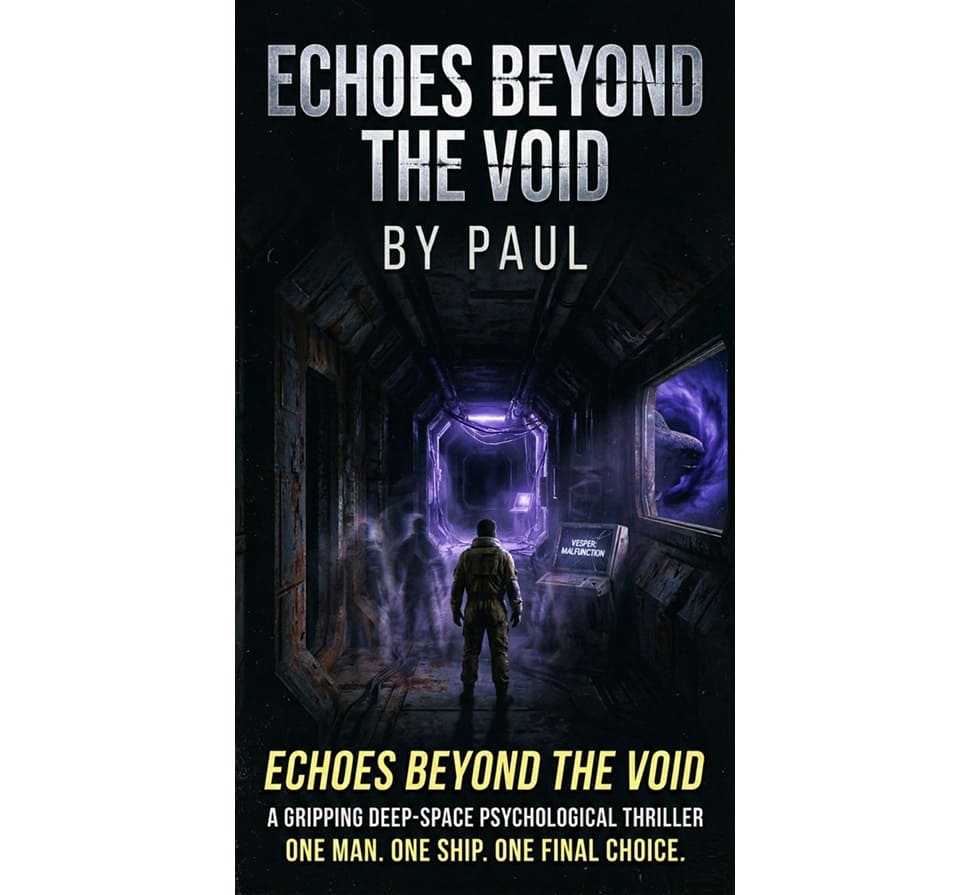
For this test, I created a sci-fi project called: “Echoes Beyond the Void”. The idea was simple: a deep-space engineer wakes up alone on a silent spacecraft, slowly realizing the mission — and possibly humanity itself — didn’t go the way it was supposed to.
⏩Setting Everything Up
I followed the process exactly as instructed. I entered:
My core idea
Selected the sci-fi genre
Chose a slightly dark, suspenseful tone
Defined a quiet, introspective main character
Picked an open-ended, slightly emotional ending
That part took maybe 5–10 minutes max. Then I ran the engine.
⏩What I Got Back (This was the turning point)
Within a few minutes, I had:
A strong, marketable title and subtitle
A surprisingly well-written book blurb
A full story bible with character direction and world-building
A clear 4-act structure
A 20-chapter roadmap
Echoes Beyond the Void - A Gripping Deep-Space Psychological Thriller The mission was supposed to save humanity. Now, he’s the only one left to remember why. Engineer Elias Thorne woke up to silence. No hum of the life-support systems, no chatter from the bridge, and no memory of how he ended up in a medical pod on the Aethelgard. As the sole occupant of a drifting starship, Elias is surrounded by the ghosts of a crew that vanished without a trace. The logs are wiped. The air is thinning. And the deeper he ventures into the ship’s darkened corridors, the more he realizes that the "silence" isn't empty—it’s screaming. A secret buried in the stars. As Elias pieced together the fragments of the mission, a terrifying truth emerges: the void isn't just a place. It’s a witness. Something followed them back from the edge of the galaxy, and it thrives on the very memories Elias is desperately trying to recover. One man. One ship. One final choice. With the ship’s core failing and the shadows closing in, Elias must decide: Is it better to die with the truth, or survive as the last living lie in the universe? If you loved the claustrophobic suspense of Project Hail Mary and the psychological haunting of Event Horizon, you won’t be able to put down this masterclass in deep-space tension. |
Project Codex: Echoes Beyond the Void I. World-Building & Setting The setting is the "silent antagonist" of the story. It needs to feel cold, mechanical, and increasingly claustrophobic. |
The Vessel: The Aethelgard
A "Generation-Zero" colonization ship. Unlike sleek sci-fi ships, this is industrial, brutalist, and built for function over comfort.
The Quiet: The ship’s AI, Vesper, is malfunctioning. It only communicates through flickering terminal text or distorted, low-frequency audio, adding to the psychological dread.
The Decay: As Elias moves through the ship, he finds "stasis-rot"—sections of the ship where the environment has collapsed, creating surreal, frozen landscapes of ice and metal.
The State of the Universe:
Earth is a "fading memory." The mission was a "Hail Mary" to establish a bridgehead at the edge of the Veil Nebula.
The Great Silence: Outside the hull, there are no stars visible—only a thick, violet nebula that absorbs light and radio waves, making the ship feel like it’s floating in an inkwell.
II. Character Direction: Elias Thorne
The "Quiet, Introspective" protagonist. Elias isn't a soldier or a hero; he’s a man who understands machines better than people.
Core Motivation: To find the "Log Zero"—the final recording of the Captain—to understand if he was abandoned or if he is the last human alive.
Psychological Profile: * He suffers from "Void-Lag," a side effect of botched stasis that causes him to have sensory hallucinations (hearing the crew’s laughter in empty hallways).
The Internal Conflict: He blames his own technical perfectionism for his isolation. He was so focused on the ship's engines that he never noticed the crew’s growing madness until it was too late.
The "Shadow" Character (Antagonist/Force):
The Echo: Not necessarily an alien, but a "memory-thief" entity within the Nebula. It mimics the voices of his lost wife or his former crew to lure him into the airlocks.
III. Themes & Emotional Core
Legacy vs. Survival: Is it enough to just stay alive if there is no one left to tell your story?
The Cost of Silence: How isolation forces a person to confront the parts of themselves they’ve spent a lifetime ignoring.
Memory as a Weapon: The "Echo" uses Elias’s guilt against him, making the struggle for survival a literal battle against his past.
IV. Narrative Rules (The "Engine" Constraints)
To keep the AI's writing consistent, these rules must be followed in every chapter:
Limited Perspective: Never leave Elias’s head. If he doesn't see or hear it, the reader doesn't either.
Sensory Focus: Emphasize the smell of ozone, the vibration of the deck, and the cold of the air. This grounds the sci-fi in reality.
The "Slow Burn": Tension should never jump to 10 immediately. Start with a flickering light; end with a bulkhead failing.
V. Key Plot Points (The "Golden Thread")
The Awakening: Elias exits stasis to find the ship on auxiliary power and the crew gone.
The First Echo: He hears a distress signal that sounds exactly like his own voice from three months ago.
The Truth of the Nebula: He discovers the ship didn't just stall; it was "caught" by something that feeds on consciousness.
The Emotional Climax: Elias must decide whether to vent the ship’s atmosphere to destroy the "Echo" (ending his life but saving the memory of humanity) or keep drifting in a beautiful, shared delusion.

The 4-Act Plot Architecture Act 1: The Cold Awakening (The Setup) |
Goal: Establish the "New Normal" and the stakes.
Key Sequence: Elias wakes up in a malfunctioning med-pod. The ship is silent. He expects to see the crew, but find empty uniforms and half-eaten meals.
The Inciting Incident: Elias discovers a localized distress signal coming from inside the ship's sealed reactor core—and the voice on the recording is his own.
The Turning Point: He realizes the ship isn't just drifting; it has been redirected toward the heart of the Veil Nebula by someone—or something—using his credentials.
Act 2: The Haunted Vessel (Rising Tension)
Goal: Explore the mystery and build the "psychological" horror.
Key Sequence: Elias travels through the industrial sectors of the Aethelgard. He experiences "Void-Lag" hallucinations where the shadows seem to mimic his movements. He finds the Captain’s quarters, but they’ve been turned into a shrine of strange, geometric symbols.
The Complication: The ship’s AI, Vesper, begins deleting files as he reads them, actively trying to keep him in the dark.
The Midpoint Pivot: Elias finally accesses the bridge cameras. He sees the footage of the crew "walking" into the vacuum of space, seemingly lured by a melody only they could hear. He realizes he didn't wake up by accident—he was chosen to be the final witness.
Act 3: The Veil Pulls Back (The Climax of Conflict)
Goal: Face the "antagonist" and escalate the stakes to the breaking point.
Key Sequence: The "Echo" takes physical form, using the ship’s internal nanite repair system to manifest as the people Elias has lost. It offers him a choice: stay in a beautiful, simulated reality where the mission succeeded, or face the cold, dark truth.
The Crisis: The ship begins its final descent into the Nebula’s core, where the pressure will crush the hull. Elias is trapped in the engine room, fighting a version of himself that doesn't want to leave.
The Turning Point: Elias discovers that the "Echo" isn't a monster; it’s a cosmic parasite that survives on the memory of dead civilizations. If he dies here, humanity’s entire history is its next meal.
Act 4: The Final Resonance (Resolution & Hook)
Goal: Provide the emotional payoff and set up the sequel.
Key Sequence: Elias rejects the simulation. He uses his engineering skills to "overload" the ship’s memory banks, flooding the "Echo" with so much raw, painful human emotion that it recoils.
The Climax: He initiates a manual override, ejecting the ship's black box into the void while the Aethelgard is consumed.
The Emotional Ending: Elias is alone in a small escape pod, drifting away from the nebula. He has no fuel and no way home, but he has the "Log Zero."
The Sequel Hook: As the screen fades, the escape pod's radio crackles. A voice from a different lost ship responds to his signal. The "Echoes" are everywhere.
The 20-Chapter Master Roadmap Act 1: The Cold Awakening (Chapters 1–5) |
Chapter 1: Elias wakes in a malfunctioning med-pod. The ship is dark, freezing, and silent. He finds his first clue: a half-eaten meal that looks weeks old.
Chapter 2: Exploration of the Living Quarters. Elias realizes he is entirely alone. He tries to access the AI, Vesper, but receives only encrypted static.
Chapter 3: The first "Echo." Elias hears a phantom conversation in the hallway. He finds a recording of himself—one he doesn't remember making.
Chapter 4: Technical Crisis. The life support begins to fail. Elias must venture into the industrial "Guts" of the ship to manual-start the oxygen scrubbers.
Chapter 5: The Turning Point. While in the vents, Elias finds a hidden terminal. He discovers the ship’s flight path was altered after the crew vanished.
Act 2: The Haunted Vessel (Chapters 6–10)
Chapter 6: The descent into the Medical Wing. Elias looks for the crew’s logs but finds "Memory Scars"—physical distortions in the metal where people once stood.
Chapter 7: Psychological isolation. Elias begins talking to a "ghost" of his wife. The reader isn't sure if it’s a hallucination or the Nebula.
Chapter 8: Vesper’s Betrayal. The ship’s AI locks Elias in the Observation Deck. He is forced to watch the violet Nebula outside as it begins to "whisper" to him.
Chapter 9: The Bridge Discovery. Elias breaks into the Bridge. He plays back the final video log: The Captain calmly opening the airlock for the entire crew.
Chapter 10: The Midpoint Pivot. Elias realizes the Nebula isn't a place; it’s a consciousness. He sees his own name on the "Voluntary Exit" list.
Act 3: The Veil Pulls Back (Chapters 11–15)
Chapter 11: The Nebula enters the ship. Atmospheric pressure changes. The "Echo" takes the form of the Captain, trying to convince Elias to "join the silence."
Chapter 12: The Battle of Wills. Elias uses his engineering tools to create a "Sanctuary Zone" of high-frequency sound to keep the Echo at bay.
Chapter 13: The Engine Room Siege. The ship is drifting into the Nebula’s gravity well. Elias must repair the thrusters while being hunted by his own memories.
Chapter 14: The False Reality. Elias is pulled into a vivid "Dream Sequence" where he is back on Earth. He almost gives up until he notices a technical flaw in the dream.
Chapter 15: The Turning Point. Elias breaks the simulation by causing a "logical paradox" in the ship's computer, forcing the Echo to reveal its true, parasitic form.
Act 4: The Final Resonance (Chapters 16–20)
Chapter 16: The Sacrifice Play. Elias realizes he can’t save the ship, but he can save the data. He begins the "Memory Dump" into a hardened black box.
Chapter 17: The Final Confrontation. Elias faces the Echo in the core. It’s no longer a ghost; it’s a terrifying mirror of his own grief.
Chapter 18: The Overload. Elias feeds the ship’s reactor a "feedback loop" of pure, unedited human suffering and joy, overwhelming the Echo’s hunger.
Chapter 19: The Escape. The Aethelgard begins to tear apart. Elias reaches the last remaining escape pod as the Nebula "screams."
Chapter 20: The Resolution. Elias drifts in the dark. He records "Log Zero." He is alone, but the truth is safe. The pod’s radio pings—a distant, unknown response.
But here’s what stood out…Everything actually connected.
The character motivations made sense.
The pacing felt intentional.
Even the progression between chapters felt natural.
That’s something I rarely see with normal AI prompts.
⏩The Result After a Few Days
After working on it across a few sessions, I ended up with:
A consistent storyline from beginning to end
Characters that didn’t randomly change halfway through
A story that actually built momentum instead of losing it
A solid foundation I could realistically publish or expand into a series
What I Liked Most
If I had to sum it up, it’s this: It removes the “chaos” from AI fiction writing. Instead of constantly fixing problems, you’re following a structure that already works. It doesn’t make you feel like you’re fighting the tool — it actually feels like you’re building something step-by-step.
What You Still Need to Do
To keep it real — this isn’t 100% done-for-you. You still need to:
Guide the AI during chapter writing
Adjust tone or dialogue where needed
Polish the final draft before publishing
But compared to starting from scratch or using random prompts…This is significantly easier and faster.
Would I Recommend It?
Yes — especially if you’ve ever:
Started a story and never finished it
Felt stuck halfway through writing
Struggled with plot structure or pacing
Wanted to create fiction but didn’t know how to organize it
This gives you a clear path to actually finishing something.
Final Thought
For me, Fiction Goldmine Engine PLR was a framework that keeps you on track. And if finishing your book has been the hardest part… this might be exactly what helps you finally get there. If you’re curious, I’d say give it a try and run a small test project like I did. You’ll know pretty quickly whether it fits your workflow.